Home Blog Page 8

UPDF denies detaining NUP’s Zedriga
0
UPDF denies detaining NUP’s Zedriga

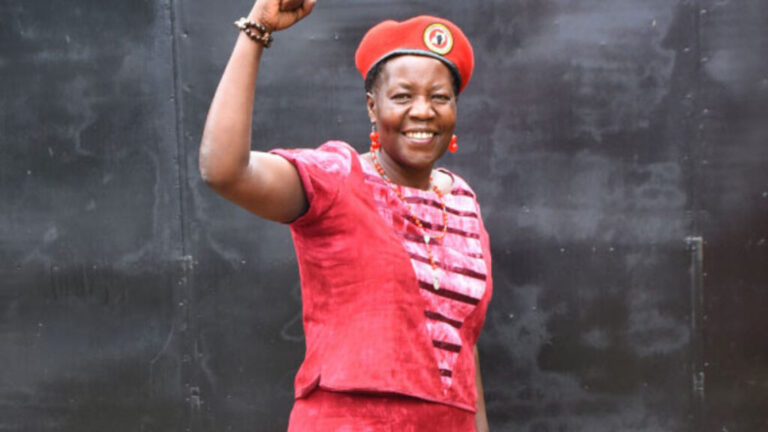
The Uganda People’s Defence Forces (UPDF) has denied holding National Unity Platform (NUP) deputy president for Northern Uganda, Dr Zedriga Lina Waru Abuku, following claims by her family that she was arrested by joint security forces and has since been detained incommunicado.

The denial is contained in an affidavit filed by the Attorney General in response to a habeas corpus application lodged before the High Court Civil Division, seeking the production of Dr Zedriga, who has reportedly been missing since January 15, 2026. The matter came up today for mention before the head of the Civil Division, Justice Joyce Kavuma.

The Attorney General informed court that the State does not have Dr Zedriga in custody and presented a formal response from the UPDF. However, police had not filed any response, prompting the court to adjourn the matter to Wednesday next week to allow investigations and a status report from the Uganda Police Force.

In the affidavit sworn by Lt Col Edgar Musasizi, the Director of Civil Affairs at the Ministry of Defence and Veteran Affairs, the army distances itself from the alleged arrest and detention of the opposition politician.

“I have personally cross-checked with all gazetted detention facilities under the control of the 2nd and 4th respondents and confirm that the applicant is not and has never been in the custody of any of the respondents at any material time,” Lt Col Musasizi states.

He further denies that operatives under the command or supervision of the UPDF or the Directorate of Defence Intelligence and Security (formerly CMI) arrested Dr Zedriga, adding that there is no record of any such operation.

“The applicant was not arrested by operatives under the command or supervision of the military… nor is there any record indicating any operation involving the arrest of the applicant,” he states.

Responding to claims that military vehicles were used during the arrest, Lt Col Musasizi states that UPDF vehicles bear identifiable number plates, making it difficult to verify whether the vehicles described by the applicant’s family belonged to the military. He also disputes allegations that security officers contacted the family after the arrest.

“The alleged call… was not made by the 2nd and 4th respondents and there is no proof connecting them to the alleged call,” he states.

The army maintains that the habeas corpus application is unsupported by evidence and is misconceived, arguing that the remedy is only available where there is proof that a respondent is unlawfully detaining a person.

“The claim that the applicant is being detained by the respondents is false, speculative and unfounded,” Lt Col Musasizi states, adding that the application is “frivolous, vexatious and brought in bad faith.”

The denial comes in response to an application filed by Dr Zedriga’s lawyers under Articles 23 and 44 of the Constitution, the Human Rights (Enforcement) Act and the Judicature (Habeas Corpus) Rules, seeking an order compelling the Attorney General, the Chief of Defence Forces, the Inspector General of Police and the Director of the Directorate of Intelligence and Security to produce her before court.

In an affidavit in support of the application, Dr Zedriga’s personal assistant, Lemi Frank John Bosco, states that she was arrested on the night of January 15, 2026, from her residence in Kyetume B, Gayaza, Wakiso District.

He states that the arrest occurred at around 7:40pm, shortly after she returned home from a voting exercise, and was carried out by joint security forces who bundled her into a military Toyota Land Cruiser, accompanied by a drone vehicle, and drove her to an unknown location.

“A few hours later, the respondents’ officers called me and informed me that she was safe but didn’t confirm where she was detained,” Lemi states.

He further states that the family reported her disappearance at Kasangati Police Station under SD reference 24/17/01/2026, but has since received no information about her whereabouts or condition.

“No family member, friend or relative has been informed on the condition of the applicant nor allowed to access her,” the affidavit states.

Justice Kavuma adjourned the matter to allow police file a response, noting that the court would issue further directions after receiving the police report.

Liverpool top English club in Deloitte Money League

0
Liverpool top English club in Deloitte Money League

BBC – Liverpool have become the top-earning Premier League club for the first time, according to analysis from financial firm Deloitte.

The Reds won the English top-flight title last season and generated 836m euros (£702m) – more revenue than any other English side.

Manchester United fell to their lowest ever position in what is the 29th edition of the Deloitte Football Money League.

Real Madrid again top the list with a 1.2bn euro (£1.01bn) revenue, despite not winning the Champions League or La Liga last season, as both Manchester clubs dropped down the list.

Barcelona were second, moving back into the top three for the first time since 2019-20 after generating 975m euros (£819m), despite playing away from their Nou Camp stadium last season as it was renovated.

Bayern Munich are third on 861m euros (£723m), Champions League winners Paris St-Germain fourth on 837m euros (£703m) and Liverpool fifth.

Manchester City dropped from second to sixth with a revenue of 829m euros (£697m).

Manchester United, who finished 15th in the Premier League and were beaten by Tottenham in the Europa League final, went from fourth to eighth with 793m euros (£666m).

United have topped the money league on 10 occasions, most recently in 2017.

Their matchday revenue will also suffer this season as they are not involved in European competition and have been knocked out of the FA Cup and League Cup at the first hurdle.

“If you went back 10 or 15 years, and you looked at Manchester United’s matchday revenue it was the industry leader,” said Deloitte Sports Business Group lead partner Tim Bridge.

“If you looked at their ability to generate commercial revenue, it was the benchmark by which everybody then went to market and set their strategy. I don’t think that remains the case.”

There are six English clubs in the top 10, with Arsenal (822m euros, £690m) in seventh, Tottenham (673m euros, £565m) in ninth and Chelsea 10th with 584m euros (£491m).

Three other English sides made the top 20, with Aston Villa (450m euros, £378m) 14th, Newcastle United (400m euros, £335m) 17th and West Ham United (276m euros, £232m) in 20th.

Overall, the revenue of the top 20 clubs went up by 11% to a record 12.4bn euros (£10.4bn).

Commercial revenues went up to 5.3bn euros (£4.5bn) from 4.9bn euros (£4.1bn) in an increase “driven by a shift in clubs’ business models focusing on the increased use of stadia and surrounding areas on non-matchdays, an increase in sponsorship revenue, and improved retail performance”.

Real Madrid’s commercial income was 594m euros (£499m), which alone would have put them in 10th spot.

Matchday income was again the revenue stream that grew at the fastest rate, increasing 16% to 2.4bn euros (£2bn).

The expanded Fifa Club World Cup, which took place in the United States last summer, helped broadcast revenue go up by 10%.

Manchester City and Chelsea were England’s representatives and taking part resulted in a 17% rise in broadcast revenues for those that were in it.

Balance needed between making money and protecting product

Deloitte’s Bridge believes the Money League figures show “clubs continuing to take greater ownership of their revenue-generating capabilities”.

However, with player’s union Fifpro taking legal action against Fifa over the increase in games in the football calendar, Bridge added that a balance needs to be struck between increased revenue and player welfare.

“On-pitch performance remains a primary driver for clubs to progress to the upper echelons of the ranking, with many clubs benefiting from new and expanded European and international club tournaments,” said Bridge.

“In the 2024-25 season, Money League clubs on average played more games than the season before, reflecting the growth of competitions and sporting performance of many in the ranking.

“While this presents substantial financial opportunity, a balance must be struck between revenue optimisation and protecting both the value of the on-field product and player welfare amidst ever-increasing fixture schedules.”

In working out its figures, Deloitte said that the amounts have been translated using the 12-month average exchange rate at the time of the clubs’ reported year end, with 1 euro equalling £0.84.

Uneb Dismisses Reports of Delay in 2025 PLE Results Release

0
Uneb Dismisses Reports of Delay in 2025 PLE Results Release

The Uganda National Examinations Board (Uneb) has refuted reports suggesting that the release of the 2025 Primary Leaving Examinations (PLE) results was delayed due to a national internet shutdown on January 14, 2026.

In a statement issued on Wednesday, Uneb described the reports as misleading and fake, noting that they had caused unnecessary anxiety among candidates, parents, and school administrators across the country.

Uneb clarified that the marking, verification, and quality assurance processes for the 2025 PLE were progressing as planned and had not been disrupted by the temporary internet interruption.

“The release date will be announced in due course. There is no cause for alarm. The process is continuing as planned,” said Jennifer Kalule-Musamba, the Board’s Principal Public Relations Officer.

The Board further cautioned the public against fraudsters who have reportedly been impersonating members of the Uneb Security Committee to extort money from school heads.

According to Uneb, the impostors claim they can alter candidates’ results or remove names from malpractice lists in exchange for payment.

Uneb stressed that it does not offer any services related to influencing examination outcomes and warned schools not to engage with individuals making such claims.

The Board urged anyone encountering suspected fraud to report the matter to the police or contact Uneb through its toll-free lines, 0800-111-427 and 0800-211-077

Museveni Hails Bitamazire as an ‘Outstanding Educationalist’ Who Transformed Education

0
Museveni Hails Bitamazire as an ‘Outstanding Educationalist’ Who Transformed Education

President Museveni has hailed the late former Minister of Education, Geraldine Namirembe Bitamazire, for her extraordinary contributions to Uganda’s education sector, describing her as an outstanding educationalist who dedicated her life to nurturing the country’s human capital.

Bitamazire passed away on Wednesday, January 14, 2026, at the age of 84.

In a message read by Vice President Maj. (Rtd) Jessica Alupo during Bitamazire’s burial at Kibugga Village, Budde Subcounty, Butambala District, Museveni highlighted the late minister’s pivotal role in advancing Uganda’s education system.

Rubongoya Condemns Arrest of Deputy Presidents, Questions Detention Without Trial

0
Rubongoya Condemns Arrest of Deputy Presidents, Questions Detention Without Trial

Here is a paraphrased version of the provided text:

The National Unity Platform (NUP) Secretary General, David Lewis Rubongoya, has denounced the arrest of lawmaker Muwanga Kivumbi. He stated that the detention demonstrates an increasing disrespect for legal procedures by state security forces.

In a social media post, Rubongoya noted that Kivumbi’s arrest means three of the party’s Deputy Presidents are now being held. The others are Jolly Tukamushaba (Western Uganda) and Lina Zedriga (Northern Uganda). Kivumbi serves as the Deputy President for the Buganda region under party leader Robert Kyagulanyi, popularly known as Bobi Wine.

Rubongoya further highlighted that Tukamushaba and Zedriga have been detained for nearly eight days without being formally charged or presented in court, accusing security operatives of operating outside the law. The NUP is urging authorities to adhere to constitutional mandates that require suspects to be brought before a court within a legally defined period.

These arrests occur during a period of significant political strain, with opposition figures voicing alarm over the state of political liberties and the actions of security agencies.

Museveni accuses NUP of “panga terrorism,” leading to the arrest of MP Kivumbi.

0
Museveni accuses NUP of “panga terrorism,” leading to the arrest of MP Kivumbi.

Police confirmed the arrest of opposition legislator Muhammad Muwanga Kivumbi on Thursday. This action follows accusations made days earlier by President Yoweri Museveni, who alleged that the lawmaker supported violent attacks by assailants armed with machetes, which the president labeled as terrorist acts connected to post-election instability.

In a short statement, a regional police spokesperson confirmed that the Butambala County MP is in custody and will be brought to court. The arrest occurs amid heightened scrutiny over the handling of opposition members during the current election period.

National Unity Party (NUP) leader Robert Kyagulanyi, known as Bobi Wine, has claimed that hundreds of party supporters and two senior officials have been forcibly disappeared over the past week as part of an escalating government crackdown. Authorities have not publicly addressed these allegations.

Kivumbi’s detention stems from remarks President Museveni made during a Sunday address, in which he accused certain opposition figures, including Kivumbi, of orchestrating coordinated assaults on polling stations after they lost parliamentary races in the recent General Election. Speaking from his residence, Museveni asserted that after Kivumbi’s electoral defeat in Butambala County, groups armed with machetes attempted to carry out violent attacks. He stated that security forces killed seven people during the incident and claimed that intelligence agencies had uncovered similar planned attacks elsewhere.

Kivumbi, who lost his parliamentary seat, has publicly rejected the president’s version of events. In a video circulated online, he accused security forces of using excessive force, displaying property damage from gunfire, and alleged that nearly ten of his supporters were killed.

In his Sunday speech, Museveni reiterated his accusations and issued a direct warning to opposition actors, vowing to maintain peace “either peacefully or unpeacefully.” He also repeated claims that some opposition elements were collaborating with foreign groups seeking to destabilize Uganda.

Opposition leader Bobi Wine has dismissed the allegations, suggesting the president is acting on incorrect intelligence. This situation echoes past cases from the previous election cycle, where opposition MPs were detained for extended periods on terrorism charges related to machete violence.

The arrest follows a presidential election held under an internet blackout and amid widespread reports of irregularities. The electoral commission declared Museveni the winner, securing a term that would extend his rule to nearly four decades, pending any successful legal challenges.

Flavian Zeija: Who is Uganda’s newly appointed Chief Justice?

0
Flavian Zeija: Who is Uganda’s newly appointed Chief Justice?

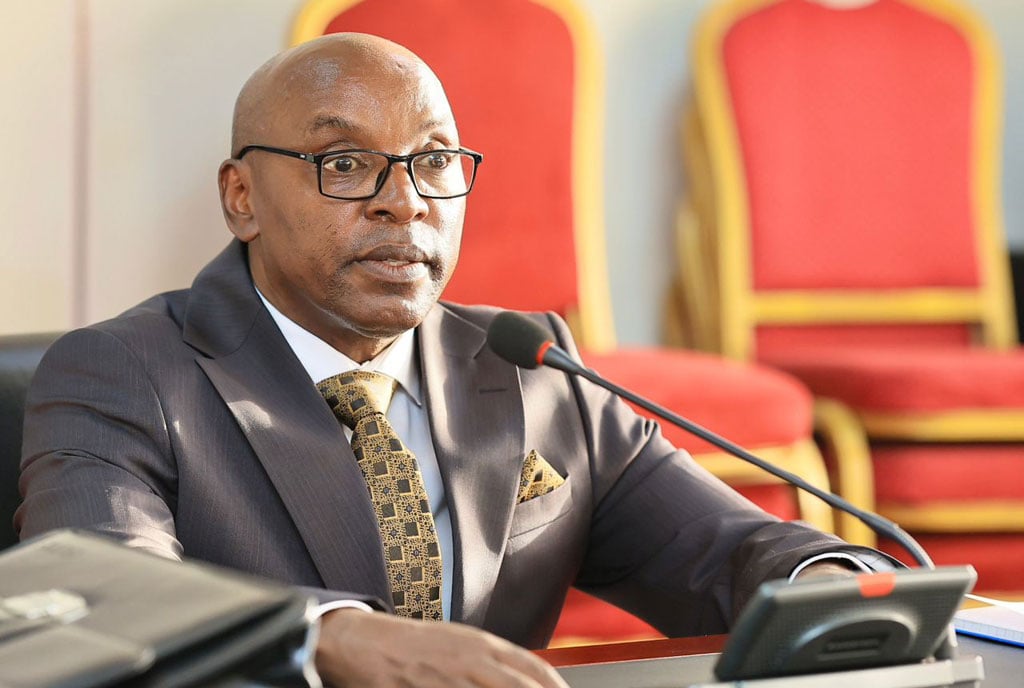
Justice Flavian Zeija, who turns 58 next month, has been swiftly vetted by Parliament’s Appointments Committee following his appointment by President Museveni as Chief Justice of Uganda, Speaker Anita Among confirmed on Thursday.

“Earlier today, we convened the appointments committee of Parliament to vet Justice Flavian Zeija, who was appointed by His Excellency the President to serve as the Chief Justice of the Republic of Uganda,” Among said.

“The committee’s report will be forwarded to the appointing authority in accordance with our rules of procedure,” she wrote on X. 

Upon approval, Justice Zeija, whose appointment was made on the advice of the Judicial Service Commission led by justice Douglas Karekona Singiza, will be elevated to the Supreme Court, where the Chief Justice presides.

Zeija, who has served as Deputy Chief Justice since February last year, assumes the top judicial office at a time when a presidential election petition challenging Museveni’s January 15 re-election has been filed, and ahead of the president-elect’s anticipated May swearing-in if the results are upheld.

He succeeds retired Chief Justice Alfonse Owiny-Dollo, who formally handed over office on January 19, 2026, marking the end of a five-year tenure described by judicial officers as “disciplined and reform-driven.”

During the handover ceremony, Zeija was presented with the Constitution, the Laws of Uganda, the Administration of the Judiciary Act, and the official court seal — the symbols of the Chief Justice’s office.

“This has been one of the best leadership periods in the Judiciary,” Zeija said, praising Owiny-Dollo’s leadership. He added that Owiny-Dollo allowed the Judiciary to perform effectively through participatory and transformational leadership.

Zeija noted that Owiny-Dollo assumed office when the Judiciary’s budget stood at about Shs180 billion and retired after it surpassed Shs400 billion.

However, Zeija takes over at a time when the Judiciary has been under fire over delays in delivering justice, alleged corruption, political interference, and challenges in handling high-profile and structurally sensitive cases, raising concerns about judicial independence and public confidence in the legal system.

Under Ugandan law, the Chief Justice is the administrative head of the Judiciary, one of the three arms of the State, and ranks fourth in protocol after the President, Vice President, and Speaker of Parliament.

With Justice Zeija’s elevation, the position of Deputy Chief Justice now needs to be filled. On Thursday, the presidency did not immediately communicate who will replace him.

Who is Justice Flavian Zeija?

Before his appointment as the Chief Justice, Flavian Zeija was deputy to the now retired Chief Justice Alfonse Owiny-Dollo. The man from Uganda’s Kigezi Sub-region also served as a Principal Judge, replacing Justice Yorokamu Bamwine. 

Dr Zeija (Phd) can be summed up as an accomplished senior legal professional with far-reaching experience both at the Bar and Bench. He is also an academician and a consultant.

He was born on February 18, 1969.

Justice Zeija enrolled as an advocate of the High Court in 1998, meaning he has had a legal career of more than 25 years.

Previously, the father of five children was the resident judge of the Mbarara High Court circuit, the largest circuit in the country.

 He was appointed as a High Court judge in 2016.

Prior to his appointment at the Bench, Justice Zeija was into legal practice as the managing partner with Zeija, Mukasa & Co. advocates and he was also into teaching.

Between 2014 and 2016, he lectured at Uganda Christian University Mukono (UCU). He also taught at Makerere University Business School (Mubs) and also at Makerere University.

While at Mubs, he was appointed the pioneer head of the department of business law.

Between 2005 and February 2011, he joined Finca Uganda as legal counsel and later Finca Africa IT Services Centre, a subsidiary of Finca International based in Washington.

He also worked at Tropical Africa Bank as manager of legal and recovery between 2002 and 2003.

Earlier in his legal career in 1998, he joined as a legal assistant with Kwesigabo, Bamwine & Walubiri Co. Advocates.

About his educational background, the new Chief Justice has a rich CV having obtained the highest level of education of obtaining a doctorate of laws (PhD) from Dar es Salaam University in Tanzania between 2008 and 2013. He specialised in law and governance during his research.

Prior to obtaining the PhD, he obtained a master’s degree in laws (LLM) from Makerere University (1999-2002).

Between 2008 and 2012, he enrolled at ICSA, an institute of chartered secretaries and administrators based in the UK.

He also has a second master’s degree in business administration from Uganda Martyrs University (2015-2018).

He obtained his first degree in law from Makerere University between 1993 and 1996 before joining the Law Development Centre (LDC), where he obtained a postgraduate diploma in legal practice in 1997.

Comment profiter du Bonus Sans Dépôt : guide du débutant pour jouer aux machines à sous en ligne

0

Le bonus sans dépôt est la porte d’entrée la plus alléchante pour qui découvre les casinos en ligne. Il permet de recevoir de l’argent virtuel ou des tours gratuits sans avoir à déposer la moindre pièce, ce qui donne l’opportunité de tester les jeux, de se familiariser avec les interfaces et, pourquoi pas, de gagner de l’argent réel. Pour les novices, c’est une façon de lever le voile sur le monde des machines à sous numériques sans prendre de risque financier.

Choisir un site fiable est cependant primordial : la réputation du casino, la licence ANJ pour la France et la transparence des conditions d’utilisation sont des critères à ne pas négliger. Vous pouvez consulter le guide complet sur le meilleur casino en ligne pour comparer les offres et vérifier les revues indépendantes.

Dans les paragraphes qui suivent, nous décortiquons le mécanisme du bonus sans dépôt, les pièges à éviter, et nous vous présentons une sélection de slots optimisés pour maximiser vos gains. L’objectif est de vous fournir un plan d’action clair, du moment où vous créez votre compte jusqu’à la transformation de vos crédits gratuits en gains réels, tout en restant dans une démarche responsable.

1. Qu’est‑ce qu’un bonus sans dépôt ?

Un bonus sans dépôt est une incitation offerte par le casino qui n’exige aucun versement préalable. Il se présente généralement sous trois formes :

  • Cash gratuit – un montant fixe (ex. 10 €) crédité sur votre compte dès l’inscription.
  • Free spins – un nombre de tours gratuits (ex. 20 spins) applicables sur une ou plusieurs machines à sous sélectionnées.
  • Bonus mixte – une combinaison de cash et de spins, souvent liée à un code promotionnel.

Contrairement aux bonus de dépôt, qui multiplient le montant versé par un pourcentage (ex. 100 % jusqu’à 200 €), le bonus sans dépôt ne dépend d’aucune transaction. Les opérateurs l’utilisent comme un aimant à nouveaux joueurs : il réduit la barrière d’entrée, crée de l’engagement et, si le joueur est satisfait, il est plus enclin à déposer de l’argent réel.

Ces offres sont limitées dans le temps et soumises à des exigences de mise (wagering). Elles servent aussi de vitrine pour tester la fluidité des paiements, la qualité du service client et la conformité aux régulations françaises, notamment la licence délivrée par l’Autorité Nationale des Jeux (ANJ).

2. Les conditions à connaître avant de réclamer un bonus sans dépôt

Wagering et limites de mise

Chaque euro reçu doit être misé un certain nombre de fois avant de pouvoir être retiré. Un ratio de 30x est fréquent : 10 € de bonus devront être joués pour atteindre 300 € de mises. Certaines offres imposent également une mise maximale par tour (ex. 0,20 €) afin d’empêcher les joueurs de placer des mises élevées immédiatement.

Jeux éligibles

Tous les slots ne sont pas compatibles avec le bonus. Les casinos précisent souvent une liste de titres (ex. Starburst, Gonzo’s Quest) où les free spins peuvent être utilisés. Le cash gratuit, quant à lui, peut être limité à des jeux à faible volatilité pour réduire le risque de pertes rapides.

Dates d’expiration

Le crédit gratuit possède une durée de vie courte, généralement entre 24 et 72 heures. Passé ce délai, le solde disparaît, même si vous n’avez pas encore satisfait les exigences de mise.

Vérification d’identité

Pour prévenir le blanchiment d’argent, la plupart des opérateurs demandent une preuve d’identité (pièce d’identité, facture de services) avant d’autoriser un retrait. Il est donc conseillé de préparer ces documents dès l’inscription.

Conseils pour éviter les pièges

Point à vérifier Pourquoi c’est important
Ratio de mise (wagering) Un ratio trop élevé peut rendre le retrait quasi impossible.
Montant maximum de retrait Certaines offres limitent le gain exploitable à 50 €.
Jeux exclus Jouer hors de la liste annule le bonus.
Date d’expiration Planifiez votre session de jeu pour ne pas perdre le crédit.

Lire attentivement les termes et conditions (T&C) vous évitera les mauvaises surprises. Prenez le temps de comparer les exigences entre plusieurs casinos avant de choisir.

3. Comment choisir le meilleur bonus sans dépôt pour les slots ?

Critères de sélection

  1. Montant du cash ou nombre de free spins – Un bonus de 15 € vaut souvent plus que 10 € de free spins, mais les spins peuvent générer un gain plus important si le slot a un haut RTP.
  2. Compatibilité avec les slots populaires – Vérifiez que les jeux que vous aimez (ex. Book of Dead, Sweet Bonanza) sont inclus dans la promotion.
  3. Régulation et licence – Privilégiez les casinos titulaires d’une licence ANJ, garantissant un cadre légal en France.
  4. Réputation et revues indépendantes – Consultez des sites comme Gamblinginsider pour lire des avis impartiaux sur la rapidité des paiements et la qualité du support.
  5. Limites de retrait – Certaines offres plafonnent le gain à 100 €, ce qui peut réduire l’attractivité.

Exemple de comparaison

Casino Bonus sans dépôt Cash / Spins Jeux éligibles Ratio de mise Limite de retrait
Casino A 10 € + 20 spins Cash + Spins 30 slots dont Starburst 25x 100 €
Casino B 15 € Cash uniquement 10 slots haut RTP 30x 150 €

Dans cet exemple, Casino B propose un montant de cash plus élevé, mais le ratio de mise plus strict et le nombre limité de jeux éligibles peuvent rendre le bonus moins flexible que celui de Casino A, qui offre à la fois du cash et des spins sur une sélection plus large.

4. Les machines à sous les plus adaptées aux bonus sans dépôt

  1. Starburst (NetEnt) – Volatilité faible, RTP 96,09 %. Idéale pour les sessions de free spins grâce à ses gains fréquents et ses re‑spins.
  2. Gonzo’s Quest (NetEnt) – Volatilité moyenne, RTP 95,97 %. La fonction Avalanche crée des combos qui peuvent multiplier rapidement le solde gratuit.
  3. Book of Dead (Play’n GO) – Volatilité élevée, RTP 96,21 %. Bien que risquée, les tours gratuits offrent un multiplicateur jusqu’à 10 x, parfait pour transformer un petit cash en gros gain.
  4. Sweet Bonanza (Pragmatic Play) – Volatilité élevée, RTP 96,51 %. Le système de paiement en cluster et les multiplicateurs aléatoires favorisent les gros coups lorsqu’on dispose d’une bankroll virtuelle.
  5. Twin Spin (NetEnt) – Volatilité moyenne, RTP 96,58 %. Les rouleaux jumelés augmentent les chances de lignes gagnantes dès les premiers tours.
  6. Dead or Alive 2 (NetEnt) – Volatilité très élevée, RTP 96,80 %. Les free spins avec des multiplicateurs croissants peuvent exploser le solde gratuit, mais nécessitent une gestion prudente.
  7. Jammin’ Jars (Push Gaming) – Volatilité moyenne, RTP 96,83 %. Le mécanisme de “jars” crée des cascades de gains qui maximisent les mises faibles.

Ces slots partagent trois points communs : un RTP supérieur à 95 %, des fonctionnalités bonus (free spins, re‑spins, multiplicateurs) et une volatilité adaptée à la taille du bonus. En les combinant avec un bonus sans dépôt, vous augmentez vos chances de convertir le crédit gratuit en gains réels.

5. Étape par étape : activer et jouer avec son bonus sans dépôt

  1. Inscription – Rendez‑vous sur le site choisi, remplissez le formulaire (nom, adresse e‑mail, date de naissance) et créez un mot de passe sécurisé.
  2. Vérification – Téléversez votre pièce d’identité et un justificatif de domicile. La validation prend généralement 24 h.
  3. Code promo – Si le casino propose un code spécial (ex. WELCOMENODEP), saisissez‑le dans la section “Bonus” du tableau de bord.
  4. Réception du bonus – Le crédit apparaît immédiatement dans votre portefeuille virtuel ou sous forme de free spins.
  5. Choix du slot – Accédez à la bibliothèque de jeux, filtrez par “Free spins” ou “Cash bonus eligible”. Sélectionnez un des titres listés précédemment.
  6. Gestion de la bankroll virtuelle – Définissez une mise maximale (ex. 0,10 €) pour respecter les limites de mise imposées par le bonus.
  7. Suivi du wagering – Surveillez votre progression dans la section “Statistiques” du casino ; la plupart affichent le pourcentage de mise déjà effectué.

En respectant ce processus, vous évitez les retards de validation et vous assurez que chaque spin compte réellement pour atteindre les exigences de mise.

6. Stratégies simples pour transformer le bonus en gains réels

  • Gestion du pari – Commencez avec la mise minimale autorisée. Augmentez progressivement (par ex. 0,05 € → 0,10 €) seulement après avoir atteint un seuil de gain (ex. +20 %).
  • Mise progressive contrôlée – Utilisez la méthode de la “mise plate” : la même mise à chaque tour pour limiter le risque de perte rapide du solde gratuit.
  • Exploiter les fonctionnalités bonus – Sur Starburst, misez sur toutes les lignes et activez le re‑spin gratuit dès que le Wild apparaît. Sur Gonzo’s Quest, misez pendant la phase d’Avalanche pour profiter des multiplicateurs.
  • Encaisser au bon moment – Dès que vous avez atteint 50 % du montant maximal de retrait, pensez à retirer partiellement pour sécuriser vos gains et réduire la pression du wagering restant.
  • Éviter le “chasing” – Si vous êtes à deux tours de la fin du wagering et que votre solde chute, ne doublez pas les mises pour rattraper rapidement ; cela augmente le risque de tout perdre.

Ces tactiques simples, associées à une sélection de slots à haut RTP, vous donnent une marge de manœuvre suffisante pour transformer un petit bonus gratuit en un gain réel et retirable.

7. Les erreurs fréquentes des débutants et comment les éviter

  • Parier trop fort dès le départ – Une mise élevée consomme rapidement le cash gratuit et rend le wagering impossible.
  • Ignorer les exigences de mise – Oublier le ratio de 30x conduit à des retraits refusés. Vérifiez toujours le compteur de mise.
  • Jouer à des jeux non éligibles – Certains slots excluent les bonus ; jouer dessus annule le crédit.
  • Négliger les limites de retrait – Certaines promotions plafonnent les gains à 100 € ; planifiez votre cash‑out en conséquence.

En restant conscient de ces pièges, vous maximisez vos chances de profiter pleinement du bonus sans dépôt.

Conclusion

Le bonus sans dépôt constitue une porte d’entrée sécurisée pour les novices souhaitant découvrir les machines à sous en ligne. En choisissant un casino licencié par l’ANJ, en lisant attentivement les conditions de mise, et en ciblant des slots à haut RTP comme Starburst ou Gonzo’s Quest, vous pouvez transformer un petit crédit gratuit en gains réels. Suivez le guide pas à pas, appliquez les stratégies de gestion de mise, et surtout jouez de façon responsable. Pour approfondir vos recherches, consultez régulièrement des revues indépendantes et des ressources comme Gamblinginsider, qui répertorient les offres les plus transparentes et les meilleures pratiques du secteur. Bonne chance, et que la volatilité soit avec vous !

MTN, Airtel, UCC sued over internet shutdown during elections

0
MTN, Airtel, UCC sued over internet shutdown during elections

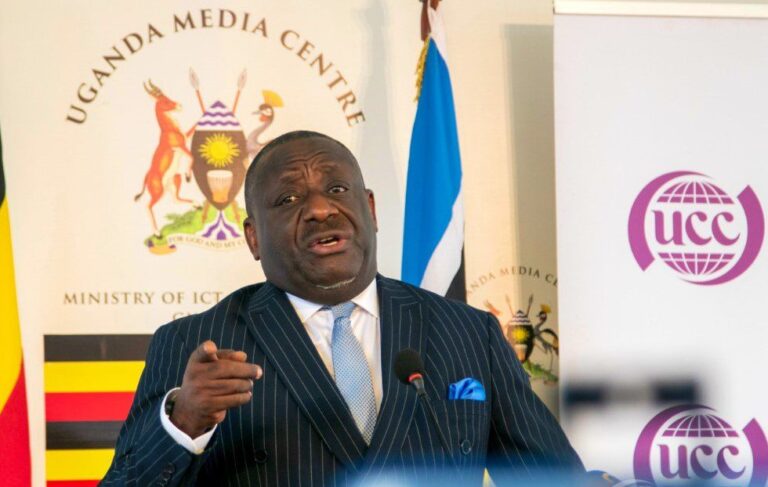
Two lawyers have filed a case in the Civil Division of the High Court in Kampala challenging the internet shutdown imposed during Uganda’s General Election in which President Museveni was declared by the Electoral Commission as the winner.
The country’s major telecommunication companies and the sector regulator have been named as respondents in the case the advocates have described as an unlawful disruption of communication services.
 
The two advocates, Michael Aboneka and Raymond Amumpaire, sued Uganda Communications Commission (UCC), MTN Uganda Limited, Airtel Uganda Limited and Tangerine Limited T/A Lyca mobile.
 
The applicants contend that the shutdown, enforced during and around polling days, violated constitutional protections and disrupted access to communication services nationwide.
 
According to court documents seen by this reporter, the applicants argue that the decision to restrict internet access was implemented without a clear legal basis and without public disclosure of the authority under which it was carried out. They maintain that the shutdown affected millions of users and interfered with access to information at a critical time.
 
“The respondents jointly and severally participated in the interruption of internet-based communication services without lawful authority,” the applicants state in their pleadings.
 
The suit challenges the legality of directives that led to the suspension of internet services, arguing that any limitation on fundamental rights must comply with constitutional requirements.
 The applicants assert that no formal legal instrument was publicly issued to justify the shutdown and that due process was not followed.
They further accuse the Uganda Communications Commission of failing in its statutory mandate as the regulator of the communications sector. According to the court documents, UCC either directed or permitted the shutdown without ensuring compliance with the Constitution and the Uganda Communications Act.
 
 
“As the regulator, the Commission had a duty to safeguard the interests of consumers and ensure continuity of communication services,” the applicants argue.
 
MTN Uganda and Airtel Uganda are accused of implementing the shutdown despite the alleged absence of lawful directives. The applicants contend that while telecommunications companies may receive instructions from regulators or state agencies, they remain bound by constitutional obligations and contractual duties to subscribers.
In affidavits supporting the application, the advocates state that the shutdown had far-reaching consequences, including disruption of mobile money services, interference with online businesses, and limitations on the ability of journalists and citizens to communicate and access information during the election period.
 “The interruption affected economic activity, media operations, and personal communication across the country,” one of the affidavits reads.
 
 
The applicants are seeking several remedies from court, including declarations that the internet shutdown was unlawful and inconsistent with the Constitution. They are also asking court to issue orders restraining the respondents from imposing similar shutdowns in future without following the law, as well as costs of the suit.
 
 
Uganda has experienced internet restrictions during previous election periods, often affecting access to social media platforms and other online services. In this case, however, the advocates argue that the shutdown went beyond permissible limitations and was imposed without transparency or accountability.
 
At the time of filing, none of the respondents had filed responses to the application. Court records indicate that the matter has been registered in the High Court Civil Division and is awaiting further directions, including issuance of summons and scheduling of hearings.
 
 The applicants say the suit seeks to clarify the legal framework governing internet shutdowns and the responsibilities of regulators and service providers when restricting access to communication services during election periods.

Czy gry w Ultra Casino mają oddziaływanie na społeczność?

0

Gry w ultra-kasyno.com stały się popularnym sposobem rozrywki wśród osób w różnym wieku. Zastanawiając się nad ich oddziaływaniem na społeczność, warto zrozumieć, jak te platformy wpływają na grywalność, interakcje społeczne oraz na kwestie odpowiedzialnej gry. W artykule zostaną przedstawione różnorodne aspekty, które ukazują, w jaki sposób gry w Ultra Casino mogą wpływać na społecznych graczy.

Wpływ gier na interakcje społeczne

Gry w kasynach online, takie jak te dostępne w Ultra Casino, stają się platformą do interakcji między graczami. Dzięki możliwości uczestnictwa w grach na żywo, gracze mogą komunikować się ze sobą oraz z dealerami, co tworzy atmosferę wspólnoty i współzawodnictwa. Ta interakcja może wzmacniać relacje między użytkownikami i stwarzać nowe przyjaźnie, a także zacieśniać więzi wśród graczy.

Dodatkowo, platformy te często organizują turnieje i promocje, które angażują społeczność i zachęcają do rywalizacji. Dzięki temu gracze mają szansę zdobyć nagrody, co może pozytywnie wpływać na ich zaangażowanie oraz satysfakcję z gry.

Odpowiedzialne granie i bezpieczeństwo

W kontekście oddziaływania gier na społeczność, należy również zwrócić uwagę na kwestie bezpieczeństwa i odpowiedzialnej gry. Ultra Casino wprowadza liczne środki, aby chronić swoich użytkowników. Posiada licencje regulacyjne, które zapewniają uczciwość gier oraz transparentność procesów finansowych.

Odpowiedzialne podejście do hazardu jest niezwykle istotne. Platforma oferuje narzędzia do samodyscypliny, takie jak limity depozytów oraz możliwość wykluczenia się z gry na pewien czas. Te praktyki mogą pomóc w ograniczeniu negatywnego wpływu gier na życie graczy oraz ich rodzin.

Dostępność gier i ich różnorodność

Różnorodność gier dostępnych na Ultra Casino przyciąga szeroką gamę użytkowników. Od automatów po tradycyjne gry stołowe, każdy może znaleźć coś dla siebie. To zróżnicowanie gier wpływa na to, że gracze mogą spędzać czas w różnorodny sposób, co jest ważnym czynnikiem w katowaniu interakcji w społeczności.

Typ gry Liczba gier Popularność
Automaty 300+ Wysoka
Gry stołowe 50+ Średnia
Gry na żywo 20+ Wysoka

Podsumowanie oddziaływania gier w Ultra Casino

Infrastruktura gier online, taka jak Ultra Casino, może w znaczący sposób wpłynąć na społeczność. Umożliwiają one interakcję, wprowadzenie nowych znajomości oraz wspierają kultury odpowiedzialnego korzystania z gier. Niemniej jednak, kluczowe jest, aby platformy te stosowały odpowiednie zabezpieczenia i promowały odpowiedzialne granie.


FAQ

  • Czy gry w Ultra Casino są bezpieczne? Tak, platforma posiada licencje i korzysta z bezpiecznych protokołów szyfrowania.
  • Jakie typy gier oferuje Ultra Casino? Oferuje automaty, gry stołowe oraz gry na żywo.
  • Jakie są środki odpowiedzialnego grania? Użytkownicy mogą ustawić limity depozytów i skorzystać z opcji wykluczenia.